
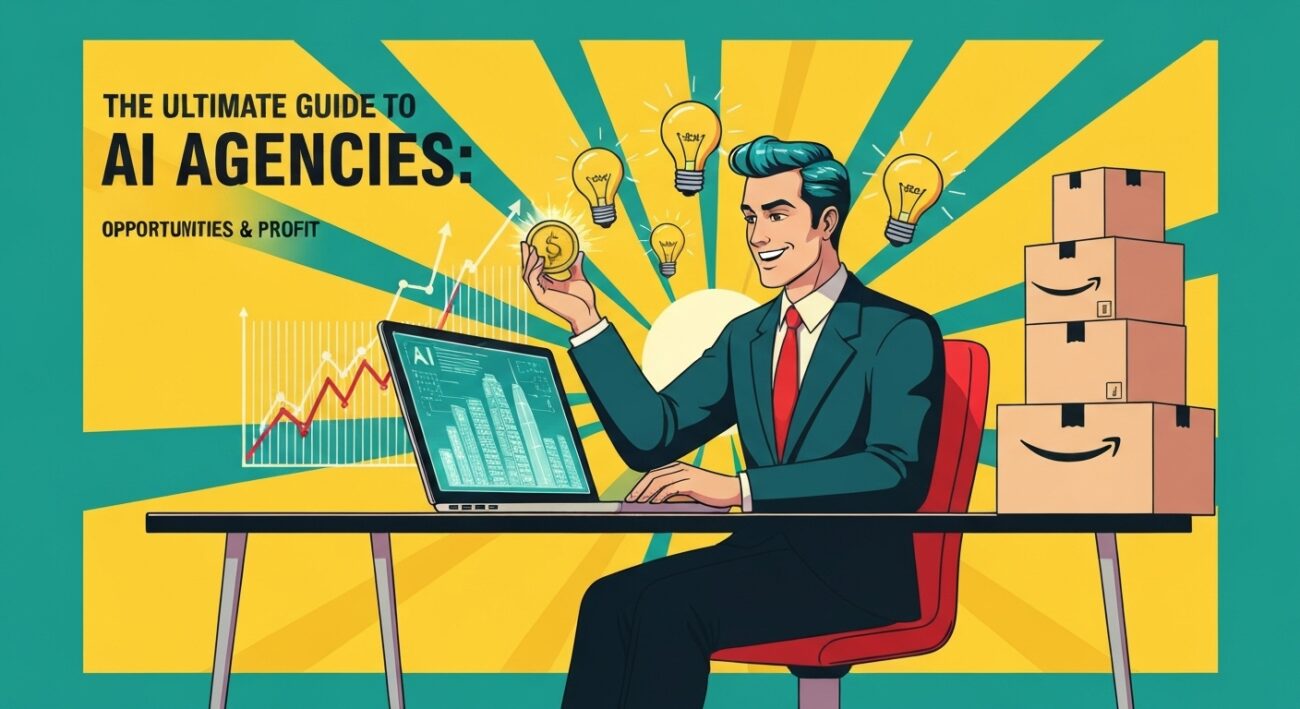
The business world is changing at warp speed, and nowhere is this more evident than in the agency landscape. For years, agencies thrived on human-intensive processes: endless research, manual content creation, and painstaking data analysis. Today, a new contender is rising: the AI-powered agency. These aren’t just traditional agencies using a few AI tools; they are businesses fundamentally structured around intelligent automation, offering unparalleled efficiency, scalability, and new service lines. If you’re an aspiring location-independent earner, a remote work seeker, or an entrepreneur looking to escape the 9-5, understanding the rise of AI Agencies presents a massive opportunity. This guide will walk you through the real earning potential, the strategic advantages, the hurdles you’ll face, and a clear path to building your own AI-driven powerhouse. Let’s be honest about the income timeline and the commitment involved – this isn’t magic, but it is the future.
Defining the AI-Powered Agency
What exactly is an AI-powered agency? It’s a professional services firm – be it marketing, consulting, web development, or creative design – that integrates Artificial Intelligence into its core operations and service delivery. Unlike a traditional agency that might use AI as an add-on, an AI-powered agency leverages AI to automate tasks, personalize client strategies, generate content at scale, analyze vast datasets, and even manage project workflows. The goal is to deliver faster, more cost-effective, and often superior results to clients, while also creating a more efficient and profitable business model for the agency itself.
Beyond Automation: Strategic AI Integration
The initial thought might be that AI simply replaces human tasks. While it does automate many repetitive jobs, the true power of an AI-powered agency lies in its ability to augment human capabilities. For example:
- Content Generation: Instead of a copywriter spending hours on research, AI drafts a compelling first version in minutes, allowing the human expert to refine, add unique insights, and strategize.
- Data Analysis: AI can sift through massive amounts of customer data, identify patterns, and predict trends far faster and more accurately than any human team, leading to more targeted campaigns.
- Client Personalization: AI can analyze individual client needs and automatically generate custom proposals or service packages, saving sales teams valuable time.
The “AI Agencies” model isn’t about firing your team; it’s about empowering them to do more strategic, high-value work. This shift allows agencies to take on more clients, offer niche services that were previously too labor-intensive, and ultimately, increase their profit margins significantly. The strategic use of AI moves agencies from being simply “service providers” to “innovation partners” for their clients.
Unlocking New Opportunities with AI
The adoption of AI tools opens up a treasure trove of opportunities for agencies willing to adapt. From hyper-efficient workflows to entirely new service offerings, AI is reshaping what’s possible. According to a recent survey by Deloitte, 79% of organizations believe AI will significantly transform their industry in the next three years, highlighting the urgency and potential for early adopters in the agency space.
Enhanced Efficiency & Cost Savings
One of the most immediate benefits is the drastic improvement in operational efficiency. AI can automate tasks that consume significant time and resources, such as:
- Market Research: AI tools can analyze competitor strategies, identify gaps, and unearth trending topics in minutes, replacing days of manual research.
- Content Production: AI writers like Jasper or Copy.ai can generate outlines, first drafts of articles, social media posts, and ad copy, cutting production time by 50-70%.
- Data Reporting: AI-powered analytics platforms can automatically generate comprehensive client reports, highlighting key performance indicators and actionable insights without manual data crunching.
This efficiency translates directly into cost savings and increased capacity. An agency can handle more clients with the same team size, or offer more complex services without increasing overhead. This allows for greater scalability and improved profitability, a core draw for those seeking location-independent income.
Scalability & Global Reach
Traditional agencies often hit a ceiling due to labor costs and geographic limitations. AI shatters these barriers. With automated processes, an AI-powered agency can:
- Serve More Clients: By reducing the per-client workload, agencies can onboard more businesses without expanding their human team proportionally.
- Expand Service Offerings: AI makes it feasible to offer highly specialized or data-intensive services (e.g., hyper-personalized email campaigns, predictive analytics for ad spend) that would be too expensive to deliver manually.
- Operate Anywhere: Many AI tools are cloud-based, allowing a fully remote team to collaborate and deliver services to clients across the globe. This is a huge advantage for remote work seekers.
Pro Tip: Focus on building AI-assisted processes that can be templated. If you can create a repeatable workflow (e.g., “AI-generated SEO blog post strategy”), you can offer it to multiple clients, multiplying your value without multiplying your effort.
While the opportunities are vast, the journey to becoming a fully AI-powered agency isn’t without its hurdles. It requires strategic planning, investment, and a willingness to adapt. These challenges, however, also represent opportunities for those who can solve them.
Ethical AI and Client Trust
One of the biggest concerns for clients is the ethical use of AI, particularly around data privacy, bias in algorithms, and transparency. Clients want to know that their information is secure and that the AI isn’t making discriminatory decisions or producing unverified content. A recent report by IBM showed that only 37% of businesses trust AI for ethical considerations, highlighting a significant trust gap.
Solution: Prioritize transparency. Clearly explain to clients how AI is used, what data it processes, and the safeguards in place. Implement strong data governance policies. Ensure human oversight remains critical for reviewing AI outputs, especially in sensitive areas like brand messaging or legal compliance. Building client trust is paramount for long-term success, and it sets ethical AI Agencies apart.
Talent Gap & Reskilling Your Team
The skills required to operate an AI-powered agency are different from a traditional one. There’s a growing talent gap for professionals who understand both agency operations and AI implementation. Your existing team may lack the expertise to effectively prompt AI tools, integrate new software, or critically evaluate AI-generated content.
Solution: Invest in reskilling and upskilling your current team. Offer training on AI tools, prompt engineering, and data interpretation. For new hires, prioritize candidates with a growth mindset and an eagerness to learn AI applications, even if they don’t have deep technical AI expertise. Consider fractional AI consultants initially to help bridge the gap and train your internal staff. This approach will strengthen your agency from within rather than relying solely on external hires.
Quality Control & The “Human Touch”
AI can generate content rapidly, but it often lacks nuance, creativity, and the genuine “human touch” that builds connection. Unchecked AI output can lead to generic, repetitive, or even inaccurate content, which damages brand reputation. The balance between speed and quality is a delicate one, and many agencies struggle to maintain high standards amidst the allure of instant content.
Solution: Implement robust quality control processes. Treat AI-generated content as a “first draft” that always requires human editing, fact-checking, and the infusion of unique brand voice and insights. The human element isn’t removed; it’s elevated to a strategic editor and creative director role, ensuring authenticity and preventing the output from feeling robotic. This approach ensures your AI Agencies maintain high standards and client satisfaction.
Building Your AI-Powered Agency: A Step-by-Step Guide
Starting an AI-powered agency can seem daunting, but by breaking it down into manageable steps, you can build a robust business designed for the future. This Triple-A Agency Model (AI-Augmented, Agile, Adaptive) provides a framework for success.
1. Define Your Niche & AI Value Proposition
Don’t try to be everything to everyone. Your agency should solve specific problems for a particular type of client using AI. Instead of “digital marketing,” consider “AI-driven content marketing for SaaS startups” or “AI-powered lead generation for e-commerce stores.” How exactly will AI allow you to deliver superior results for this niche?
2. Select Your Core AI Toolkit
You don’t need every tool under the sun. Start with a foundational set of AI tools that address your core service offerings. For content creation and SEO, tools like SurferSEO (for content optimization) and Jasper (for writing) are excellent. For project management and client communication, explore AI-enhanced CRM systems. Research each tool thoroughly; many offer free trials. The official documentation for tools like ChatGPT or Midjourney can provide insight into their capabilities.
3. Develop AI-Augmented Workflows
This is where the magic happens. Map out your current agency processes and identify where AI can streamline, automate, or enhance. For example:
- Client Onboarding: Use AI to summarize client needs from discovery calls and generate personalized intake forms.
- Content Creation: AI drafts initial blog posts and social media copy based on keywords. Human editors review, enhance, and add unique insights.
- Campaign Management: AI analyzes ad performance data in real-time and suggests optimization strategies.
- Reporting: AI compiles data from various sources into easy-to-understand client reports.
Document these new workflows to ensure consistency and efficiency across your team.
4. Pricing Your AI-Powered Services
Do not charge less because you use AI. Your value comes from the superior results and efficiency you deliver, not the effort expended. Price based on the value provided to the client. You can offer faster turnaround times or more comprehensive services than traditional agencies, justifying premium pricing. Think about performance-based pricing models where AI’s efficiency gains benefit both you and the client.
5. Market Your AI Agency
Your unique selling proposition is your AI integration. Highlight how your use of AI leads to better ROI, faster results, and deeper insights for clients. Create case studies showcasing how AI helped you achieve specific, measurable outcomes. Network within AI and industry-specific communities. Attend webinars and conferences focused on AI in business. This will differentiate you from conventional agencies and attract forward-thinking clients.
Profitability in the AI Agency Model
The financial rewards for AI Agencies can be substantial, often surpassing traditional agency models due to reduced overhead and increased capacity. This isn’t just theory; the market data shows that agencies leveraging AI are experiencing significant growth in revenue and client retention. A 2023 report by the Association of National Advertisers (ANA) indicates that agencies using AI for content are seeing a 20-30% increase in content output, leading to more client work and higher revenue.
Earning Potential Breakdown for AI Agencies
- Solo AI Consultant/Freelancer (0-6 months): Focusing on one or two AI-powered services (e.g., AI-assisted copywriting, SEO strategy). Expect $2,000-$6,000 monthly after 3-4 months of consistent client acquisition.
- Growing AI Boutique Agency (6-18 months): A small team (2-3 people) offering a range of AI-enhanced services. Revenue can range from $8,000-$25,000 monthly, with profit margins often higher than traditional agencies due to automation.
- Established AI-First Agency (18+ months): A larger team with specialized AI roles, serving multiple clients across various sectors. Monthly revenues of $30,000-$100,000+ are achievable, with a strong focus on scaling AI processes and retaining top talent.
- Niche AI Agency (e.g., specialized in a complex industry): For highly specialized niches (e.g., AI for legal marketing, medical content), profit margins can be even higher, with premium pricing for unique AI-driven insights.
Pro Tip: Reinvest a portion of your profits back into advanced AI training for your team and exploring new, cutting-edge AI tools. Staying at the forefront of AI technology is how AI Agencies maintain their competitive edge and ensure long-term profitability.
The Future of AI Agencies: What’s Next?
The landscape of AI is constantly evolving, and so too will the role of AI-powered agencies. The “death of the creative” is greatly exaggerated by AI; it’s actually the rise of the augmented creative, where human ingenuity, critical thinking, and empathy become even more valuable in guiding and refining AI outputs. The next wave of innovation will likely involve even more sophisticated AI models, hyper-personalization, and predictive analytics that will allow agencies to anticipate client needs and market shifts with unprecedented accuracy.
Agencies that embrace AI now are not just adopting new tools; they are building future-proof businesses. The focus will shift from “doing the work” to “designing the systems” that do the work, and then continually optimizing those systems. This strategic pivot means a different kind of agency owner – one who is less a manager of people and more a visionary for technology-driven service delivery. The demand for ethical AI implementation, strong human oversight, and a deep understanding of client psychology will only grow. Those who master the art of combining artificial intelligence with authentic human connection will lead the next generation of successful agencies.
Investment Required Section
- Time Commitment: Initially, expect to invest 20-30 hours per week for setup and initial client acquisition. Once established, this can reduce to 10-15 hours per week for management and scaling, freeing up time for other pursuits or further growth.
- Money Needed Upfront: You can start lean for under $200-$500 by leveraging free trials and essential tools. A more robust setup with paid AI content tools, an SEO suite, and a professional website could cost $200-$500 per month.
- Skills to Develop: Prompt engineering (the art of giving good instructions to AI), basic understanding of AI capabilities and limitations, strategic thinking, client communication, and continuous learning. These are skills that can be developed on the job, and they dont require a specific degree.
- Ongoing Costs and Maintenance: Monthly subscriptions for AI tools, software licenses, website hosting, and potential costs for specialized AI consultants or advanced training. This is typically 10-20% of your gross revenue for high-performing AI Agencies.
Bottom Line: Your Path to Freedom
The rise of the AI-powered agency isn’t just a trend; it’s a fundamental shift in how professional services are delivered. For aspiring entrepreneurs, remote workers, and side hustlers, it represents an incredible opportunity to build a highly efficient, scalable, and profitable business without the traditional overheads or geographical constraints. My own journey showed me that the biggest hurdle is often just getting started. Many people get caught up in analysis paralysis, trying to find the best best tool or the perfect strategy. The truth is, the market is moving too fast for perfection. Start small, experiment with AI, learn continuously, and always keep your client’s value at the forefront. The freedom of running a successful, AI-augmented agency is within reach, but it demands action, not just aspiration. You can realistically build a substantial income stream within 12-18 months of focused effort, redefining what “work” truly means for you.
Frequently Asked Questions
Q – Is starting an AI agency a good idea for beginners?
A – Yes, it’s an excellent idea for beginners who are tech-savvy and willing to learn. AI tools lower the barrier to entry for many agency services, allowing individuals to deliver high-quality output without needing a large team or extensive prior experience. The learning curve is manageable for those eager to adapt.
Q – What are the main services an AI agency can offer?
A – AI agencies can offer a wide range of services, including AI-driven content creation (blogs, social media), enhanced SEO strategy, personalized email marketing, data-backed ad campaign optimization, predictive analytics, advanced market research, and even AI chatbot implementation for customer service.
Q – How long does it take for an AI agency to become profitable?
A – A solo AI consultant can often become profitable within 2-4 months due to low overheads and high-value services. A small agency with 2-3 members might take 6-12 months to reach consistent profitability, depending on client acquisition and the complexity of services offered.
Q – What are the biggest risks when starting an AI agency?
A – Key risks include over-reliance on AI without human oversight (leading to quality issues), failure to adapt to rapidly changing AI technologies, and challenges in building client trust around ethical AI use. Data privacy concerns and competition from traditional agencies are also factors.
Q – Do AI agencies replace human workers?
A – Not entirely. AI automates repetitive tasks, freeing human workers to focus on higher-level strategy, creative direction, client relationships, and critical problem-solving. It’s more about augmentation than replacement, shifting roles rather than eliminating jobs for those willing to adapt and upskill.
- 1 Defining the AI-Powered Agency
- 2 Unlocking New Opportunities with AI
- 3 Navigating the Challenges of AI Integration
- 4 Building Your AI-Powered Agency: A Step-by-Step Guide
- 5 Profitability in the AI Agency Model
- 6 The Future of AI Agencies: What’s Next?
- 7 Investment Required Section
- 8 Bottom Line: Your Path to Freedom
- 9 Frequently Asked Questions
